Reverse Engineering Replacement Parts Explained

A failed bracket, worn shaft, cracked housing, or damaged guard can stop an otherwise serviceable machine. When the original manufacturer no longer supports the equipment or the part has a long lead time, reverse engineering replacement parts can provide a practical path forward. The goal is not simply to copy what broke. It is to understand what the part does, why it failed, and what it must withstand before a replacement is made.
For fleets, contractors, farms, property operations, industrial facilities, and marine operators, this approach can turn a hard-to-source part into a workable repair plan. Done carefully, it helps keep equipment moving without compromising fit, function, or safety.
What Reverse Engineering Replacement Parts Means
Reverse engineering is the process of studying an existing component to create the information needed to reproduce or improve it. A technician or fabricator measures the part, identifies its material and critical features, evaluates how it works with surrounding components, and develops a drawing or model for fabrication.
The original part may be intact but worn. It may be broken into pieces. In some cases, only the mating surfaces, photographs, equipment manuals, or a similar unit are available. The amount of information on hand affects the process, but the standard stays the same: the replacement must perform the job it was designed to do.
This work is especially useful for older equipment, specialized attachments, discontinued assemblies, custom-built machinery, and components that are difficult to source quickly. It can also make sense when a small but essential part holds up a much larger operation.
Start With Function, Not Just Dimensions
A part can look simple and still be carrying a serious load. A flat plate may act as a structural brace. A bushing may control alignment. A cover may protect workers from moving components. Copying the visible shape without understanding the function is where repairs can go wrong.
Before fabrication begins, the first questions should be practical. What loads does the part carry? Does it see vibration, heat, pressure, abrasion, moisture, chemicals, or repeated impacts? Is it a wear item meant to be replaced regularly, or a structural part expected to last for years? Does it need to maintain a precise clearance with another component?
Failure history matters too. If the original part bent, cracked, or wore out early, making an exact duplicate may repeat the same problem. A thicker section, better material, added gusset, improved drainage, or revised wear surface may be appropriate. But a change should be deliberate. An overbuilt part can create interference, transfer stress to another area, or make service harder later.
The Reverse Engineering Process in the Field
The best results come from a disciplined process, even when the job is urgent. A mobile repair or fabrication team may begin with an on-site inspection so the equipment, failed component, and operating conditions can all be evaluated together.
Inspect the failed component and surrounding assembly
The part should be cleaned enough to expose cracks, wear patterns, mounting points, and previous repairs. The surrounding equipment needs attention as well. Misalignment, loose hardware, damaged bearings, hydraulic issues, or excessive vibration may be the real reason the part failed.
This inspection also identifies safety concerns. A replacement part may be unsuitable if the failure involves a lifting point, pressure boundary, braking system, steering component, machine guard, or another safety-critical application without the proper engineering review and verification.
Capture accurate measurements
Measurements go beyond overall length, width, and thickness. Hole locations, centerlines, thread sizes, bore diameters, keyways, angles, radii, surface finishes, and tolerances can all affect fit. When a broken part is distorted, measurements may need to be taken from matching components or undamaged mounting locations rather than from the failed piece alone.
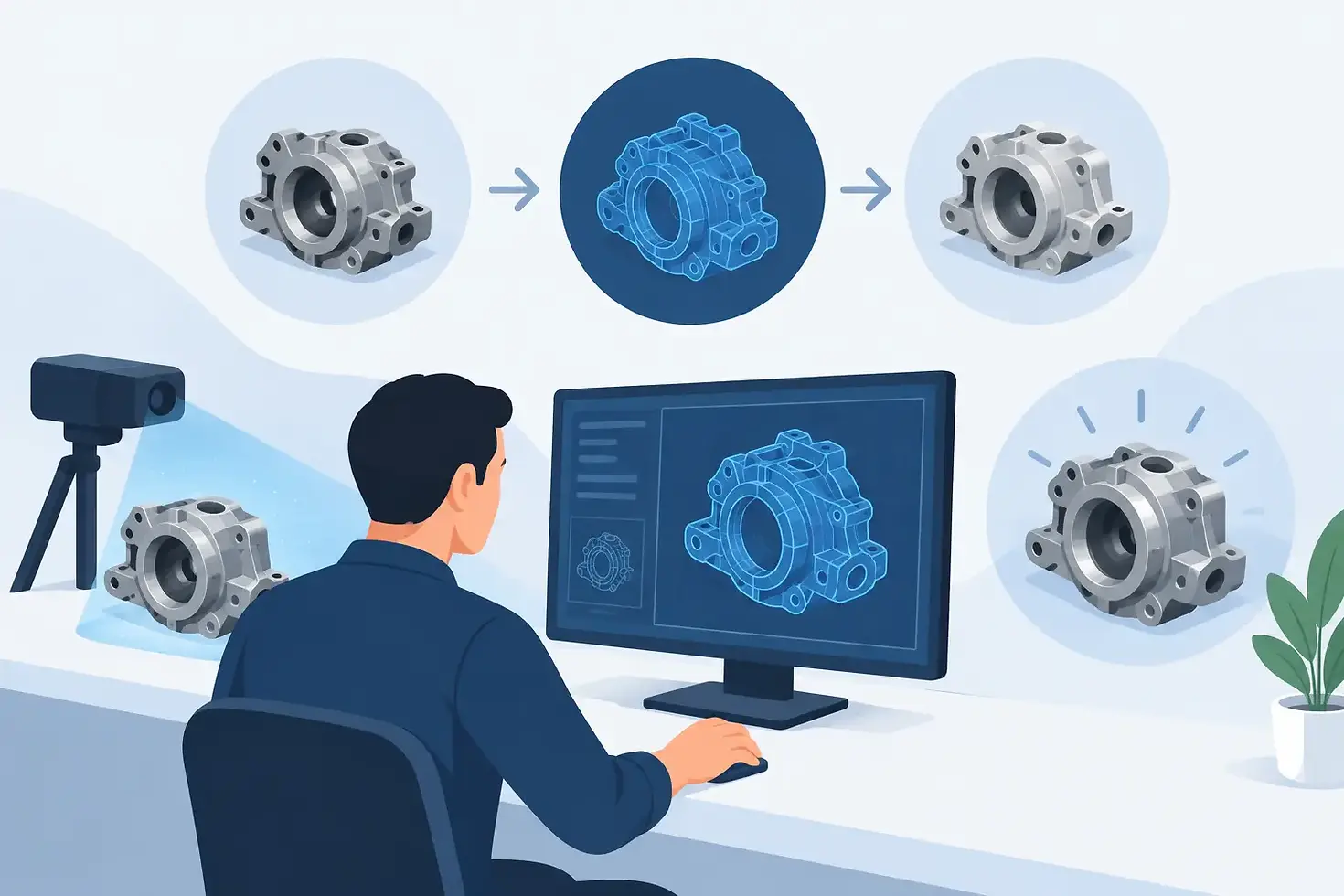
Photos with reference dimensions and clear notes help preserve information before the equipment is moved or the damaged part is discarded. For complex shapes, a digital scan or computer-aided model may be useful. For straightforward brackets, guards, plates, and wear components, careful manual measurement may be all that is needed.
Select the material and fabrication method
Material selection should match the job. Mild steel may work well for a basic bracket. Abrasion-resistant plate may be needed for high-wear areas. Stainless steel, aluminum, bronze, engineered plastic, or specialized alloys can be better choices where corrosion, weight, friction, heat, or chemical exposure is involved.
The fabrication method also depends on the component. Cutting, machining, welding, bending, forming, casting, and additive manufacturing each have a place. A one-off machined shaft may be the right answer for a repair, while a formed plate assembly may better match the original structure. The key is choosing a process that can hold the required dimensions and produce a durable result.
Build, test, and document
Before the equipment returns to service, the replacement should be checked against the mounting points and mating components. Hardware, alignment, clearance, movement, and operation all need verification. On a rotating component, balance and runout may matter. On a hydraulic or pneumatic component, pressure testing may be required. On structural work, weld quality and load path deserve close attention.
Documentation makes the next repair easier. A drawing, material record, part number, and notes on the application can turn a difficult one-time problem into a repeatable maintenance solution. If the same part is likely to fail again, keeping the design on file reduces downtime on the next call.
When a Replacement Part Should Be Improved
Reverse engineering is not always about producing an exact duplicate. Improvements are often justified when the original design is known to have weaknesses, provided the change does not affect safety, equipment performance, or manufacturer specifications.
A practical improvement may include reinforcing a recurring crack point, changing a sharp inside corner to a radius, using replaceable wear pads, or updating a material for a wet or corrosive environment. A guard may be redesigned for easier access during routine maintenance. A bracket may be adjusted to eliminate a known interference issue.
Still, not every part should be altered. Components that affect regulated systems, machine ratings, operator protection, emissions controls, or critical load handling require the appropriate engineering, approvals, and testing. For these applications, a fabricated solution is not a shortcut around proper standards.
Common Situations Where It Helps
Reverse engineering replacement parts is most valuable when the equipment itself remains worth maintaining but a single component has become the bottleneck. It can support a broad range of real-world repairs, including:
Obsolete machine brackets, guards, covers, and mounts
Worn bushings, pins, shafts, spacers, and couplings
Agricultural and hauling equipment wear parts
Custom truck body, trailer, and fleet-mounted hardware
Marine fittings and corrosion-damaged components
Industrial fixtures, conveyor parts, and production-line supports
It is not always the right route. If an off-the-shelf part is readily available and meets the need, sourcing it is usually simpler. If the equipment has widespread wear, poor reliability, or unavailable supporting components, a larger repair-versus-replacement decision may be needed. The right answer depends on the condition of the equipment, the urgency of the work, and the role that asset plays in daily operations.
Choosing a Partner for Fabrication and Parts Support
A capable provider should be willing to ask questions before promising a solution. They should want to see the failed part, inspect the application, and understand the equipment's work environment. Fast response matters, but guessing at dimensions or materials creates a second breakdown waiting to happen.
Look for practical capabilities: field inspection, parts sourcing, fabrication coordination, repair support, and clear communication about what can be safely reproduced. For customers who manage multiple operational needs, one point of contact can prevent the handoffs that slow down an urgent repair. ACG Solutions USA approaches these jobs with the same focus used across maintenance, hauling, and operational support: identify the problem, bring the right resources together, and keep the customer running.
The strongest replacement part is the one that fits correctly, performs under real working conditions, and leaves the equipment better prepared for the next hard day of work.



Comments